New York City Department of Environmental Protection
Location: New York City, NY
Street Context: Dense Urban
Project Area: Citywide
Impervious Area Within Combined Sewer Tributary: 78,749 acres
Participating Agencies: New York City Departments of Transportation, Environmental Protection, Design and Construction, and Parks and Recreation
Timeline: Green Infrastructure Plan released 2010 Demonstration projects completed 2012
Cost: $1.5 billion over 20 years
Goals
Stormwater management: Manage 1-inch rain event runoff from 10% of impervious surfaces through green infrastructure.
Cost-effective regulatory compliance: Reduce combined sewer overflow events using green infrastructure to save billions of dollars in gray infrastructure investment needs.
Water quality: Improve water quality in New York’s harbor and watersheds.
New York City Department of Environmental Protection
Overview
The New York City Department of Environmental Protection (DEP) is required, under a 2005 Order on Consent by the New York State Department of Environmental Conservation to reduce combined sewer overflows (CSOs), to improve water quality in and around the city. In 2012, the consent order was modified to include an ambitious green infrastructure program, anticipated to save billions over the cost of traditional gray infrastructure (sewers, holding tanks, and new or expanded wastewater treatment plants).
Street right-of-way comprises 28% of all NYC CSO drainage areas, more than any other category of City- managed land. The vast majority of this area is made of impervious asphalt and concrete, and funnels nearly all stormwater into the city’s combined sewer system. Public right-of-way is the most readily accessible site type for green infrastructure and is therefore the first area addressed by DEP’s program. DEP is also developing procedures for widespread implementation of green infrastructure on public and private property.
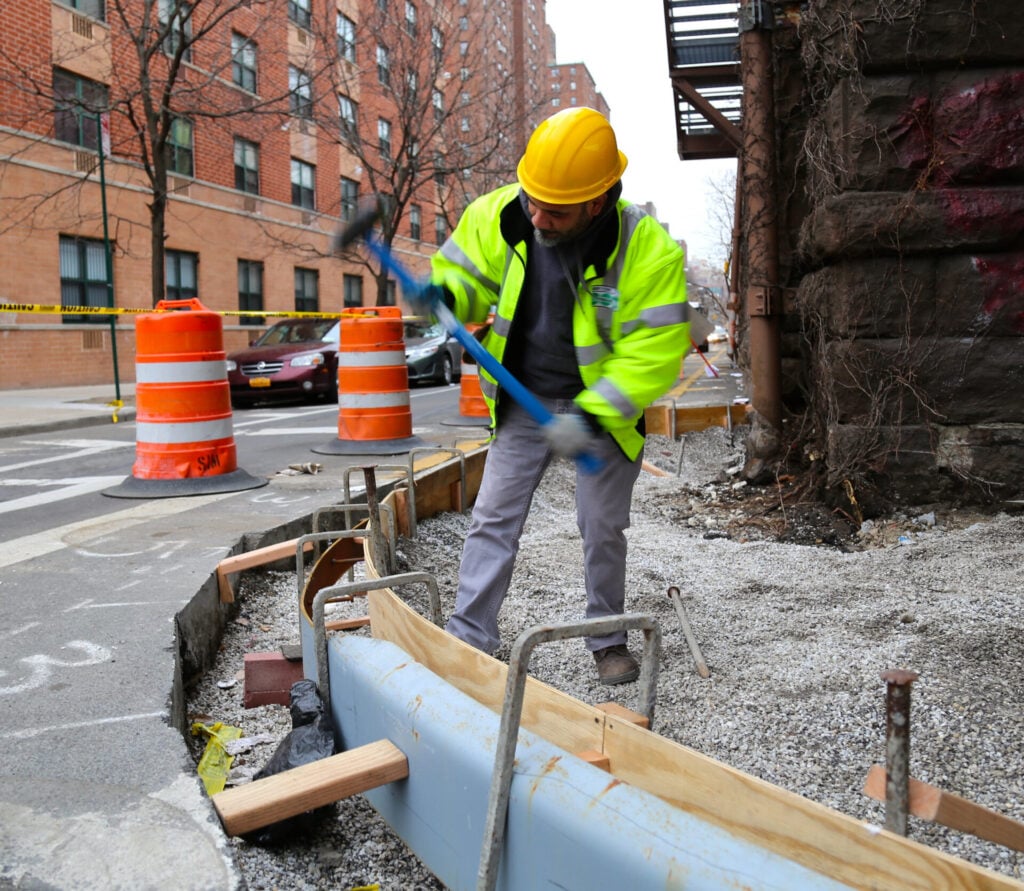
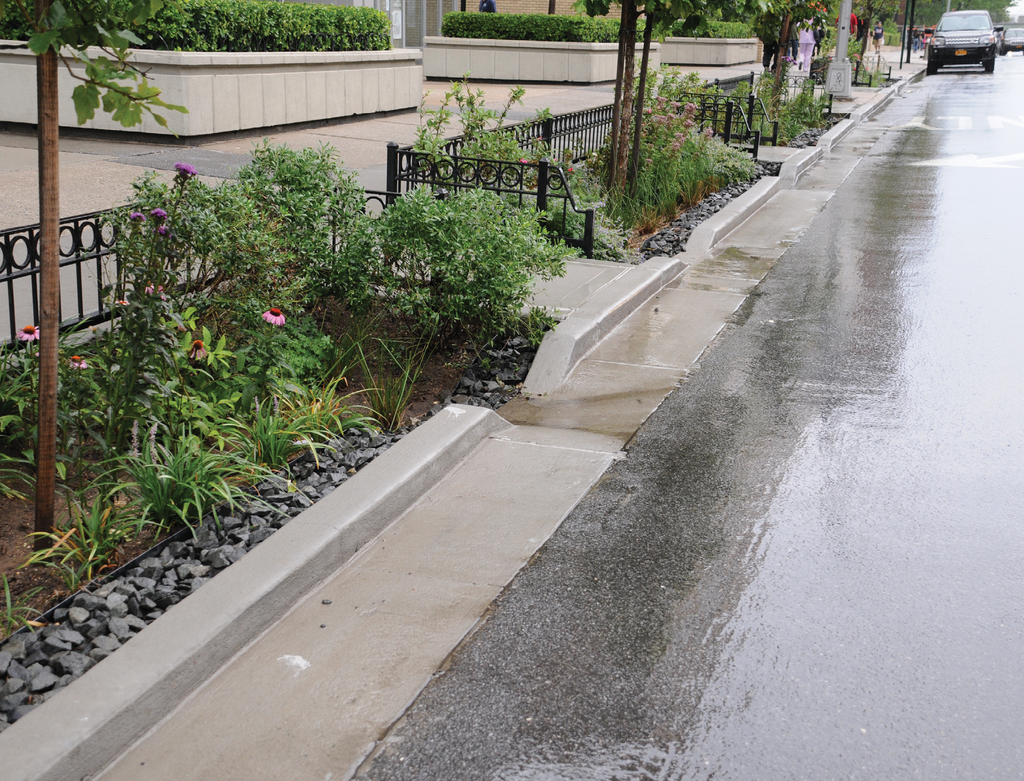
NYC developed bioswale standards and an ambitious plan of deploying an average of one bioswale per acre of the target tributary areas. Bioswales are built upstream of existing catch basins to capture runoff from the street and sidewalk, and allow for runoff from extreme rain events to continue to flow into the combined sewer system once green infrastructure is fully saturated.
The right-of-way program evolved from Greenstreets, launched by NYC Parks and Recreation decades ago to improve air quality and beautify neighborhoods with plantings in unused street rights- of-way. NYC DEP’s green infrastructure explicitly aims to capture stormwater, especially in areas where traditional bioswales are impractical or inefficient.
Keys to Success
Standardized designs. An interdepartmental working group tested bioswales over a range of streets to determine design standards that could be replicated without the need for intensive site-specific design work. Final bioswale designs range from 10–20 feet in length, and 3–6 feet in width to maximize the volume of stormwater captured by each project.
Have clear siting standards. Trained staff inspect potential sites for new green infrastructure using a set list of criteria established in concert with the NYC Department of Transportation, which oversees all city rights-of-way. Due to strict criteria and the constraints of a highly built urban environment, many possible sites are initially selected and then winnowed down by disqualifying criteria (e.g., being too close to an intersection or subway line, or on ground with poor drainage qualities).
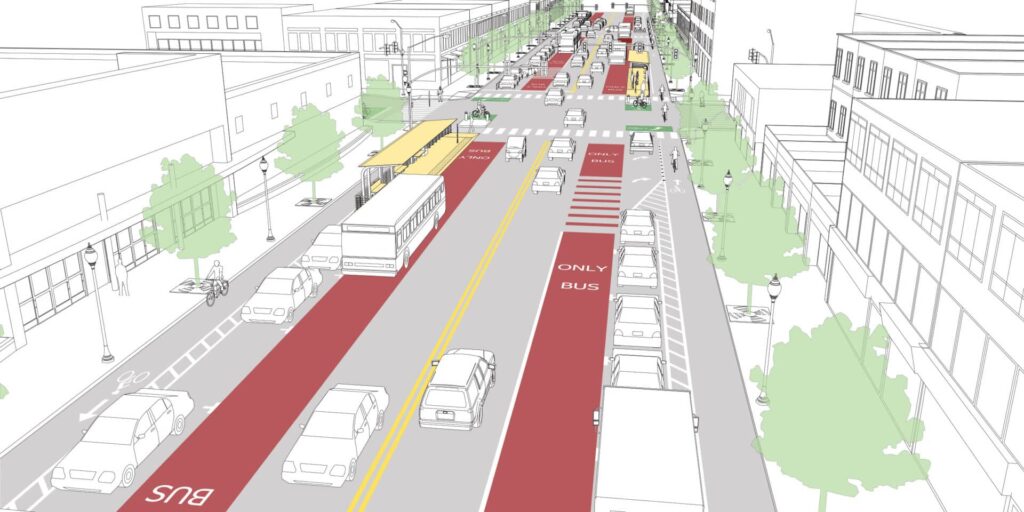
Pair green infrastructure investments with other capital projects. Every capital streets project undertaken by New York City is reviewed for potential green infrastructure inclusion. For example, New York City is building numerous Select Bus Service routes, which often require capital reconstruction of the roadway. As the street is already being reconstructed, DEP has committed to installing and maintaining bioswales in transit stops along the corridor, fast-tracking green infrastructure installation, and providing a more pleasant experience for transit riders.
Clearly communicate co-benefits of green infrastructure. Bioswales and Greenstreets improve the street’s aesthetics, attract pollinators, improve air quality, and sequester carbon.
Perform community outreach while siting. The same team that sites bioswales on the street and checks for site compliance also distributes literature to residents on the street, increasing the efficiency of the team.
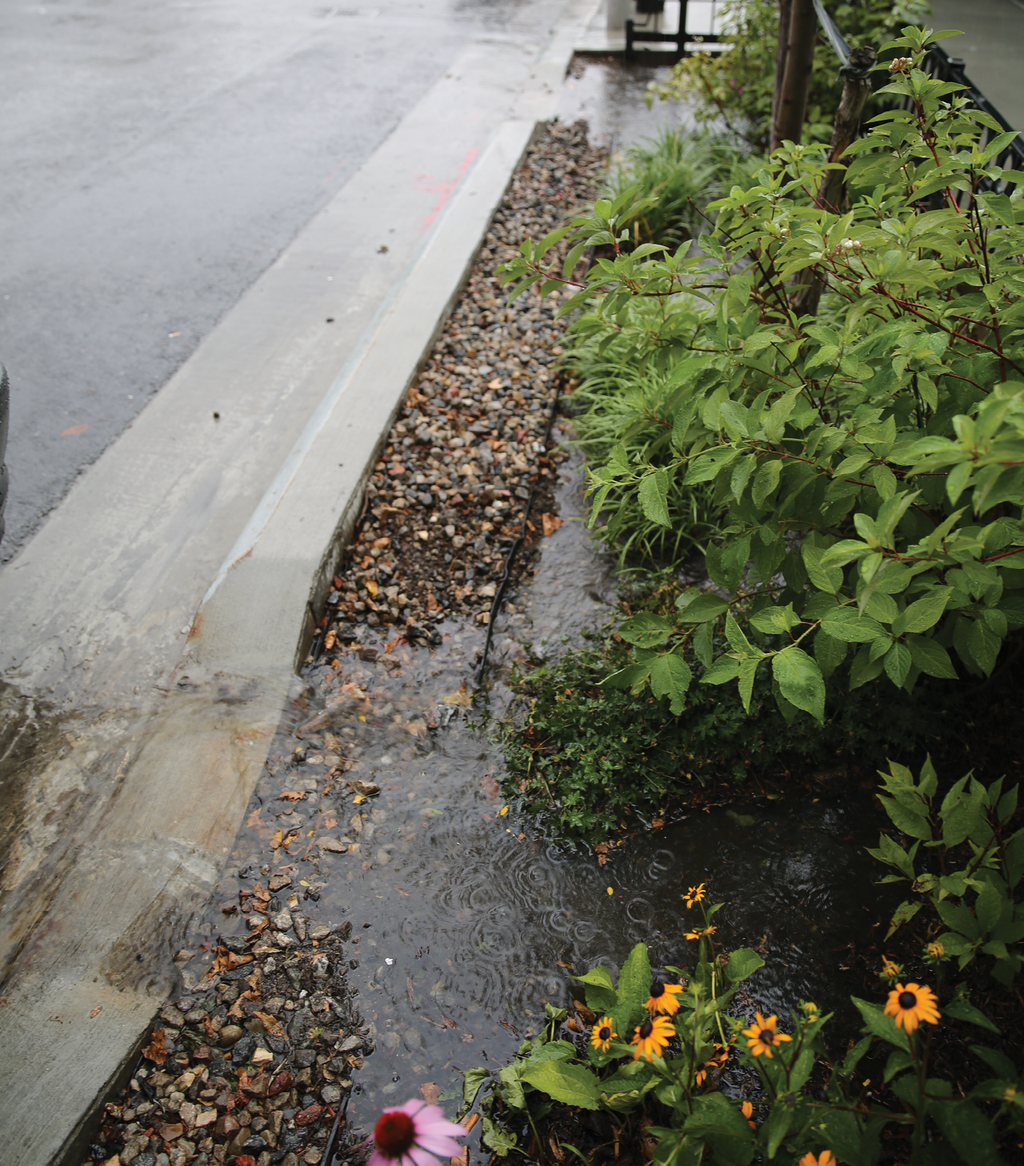
New York City Department of Environmental Protection
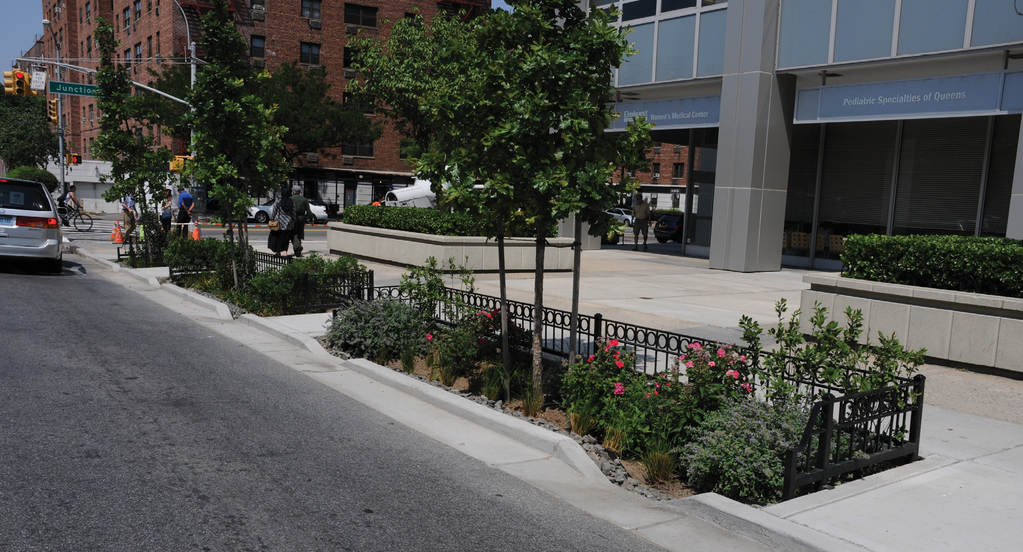
New York City Department of Environmental Protection
Lessons Learned
Involve all stakeholders. Thoroughly identify all stakeholders early, including not-so-obvious actors that may be affected by new built infrastructure, such as potential upcoming real estate development, and city departments involved with roadway resurfacing.
Think about maintenance from the start. The easier green infrastructure is to maintain, the more successful it will be long-term. Choose plants that will require little maintenance, and have a plan for trash collection, clearly communicated to stakeholders, to keep bioswales litter-free and in a highly functioning state.
Clearly communicate cost savings. NYC’s investment of $2.4 billion in green infrastructure is anticipated to save New York City $1.4 billion as compared to gray infrastructure substitution projects, and an additional $2 billion in deferred costs.
Outcomes
0.6% impervious surface runoff captured by 2015, 6% of 2030 goal.
3,830 green infrastructure assets built or under construction by 2015.
Urban Street Stormwater Guide
Learn more about transit streets in NACTO’s Urban Street Stormwater Guide.