
In 2025, NACTO hosted a seven-part virtual series exploring the latest in city transit work. Transit Tuesdays provided space for staff from NACTO member cities to swap insights, share project successes, and reflect on lessons learned on a variety of transit-focused topics.
The series featured both “learning” and “listening” sessions, giving members opportunities for both peer learning and more in-depth conversations. During learning sessions, featured speakers from member agencies gave presentations on topics ranging from bus stop accessibility to network planning. A week after each learning session, listening sessions focused on peer-to-peer discussions.
July 2025
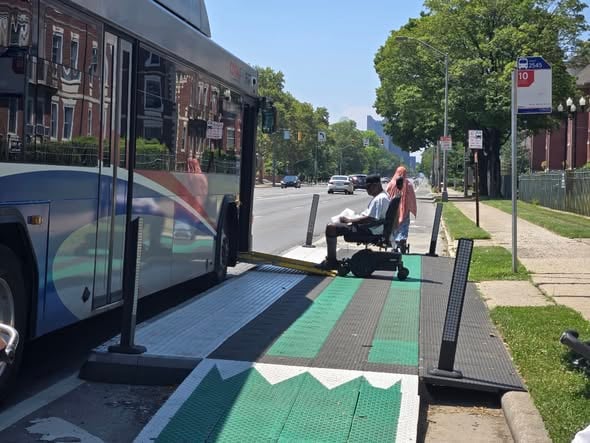
Bus Stops and Access
Transit Tuesdays kicked off in July with discussions on bus stop accessibility improvements and strategies for navigating interagency collaboration.
Workflows for bus stop accessibility in NYC
Speaker: Tyler Peter, Senior Transit Planner
The New York City Department of Transportation (NYC DOT) manages 5,000 bus stops across the city and is methodically upgrading them to meet ADA standards. Senior Transit Planner Tyler Peter discussed NYCDOT’s workflows for reviewing, maintaining, and upgrading 25+ bus stops a year to meet ADA standards.
- The Bus Stop Accessibility team identifies priority stops and tracks construction projects through a combination of Lidar and Census microdata, ArcGIS web maps, and Microsoft Lists
- For small-scale improvements, the DOT contracts in-house construction crews during downtime of larger capital projects.
IndyGo’s interagency collaboration
Speakers: Christian Cambron and Ryan Gallagher
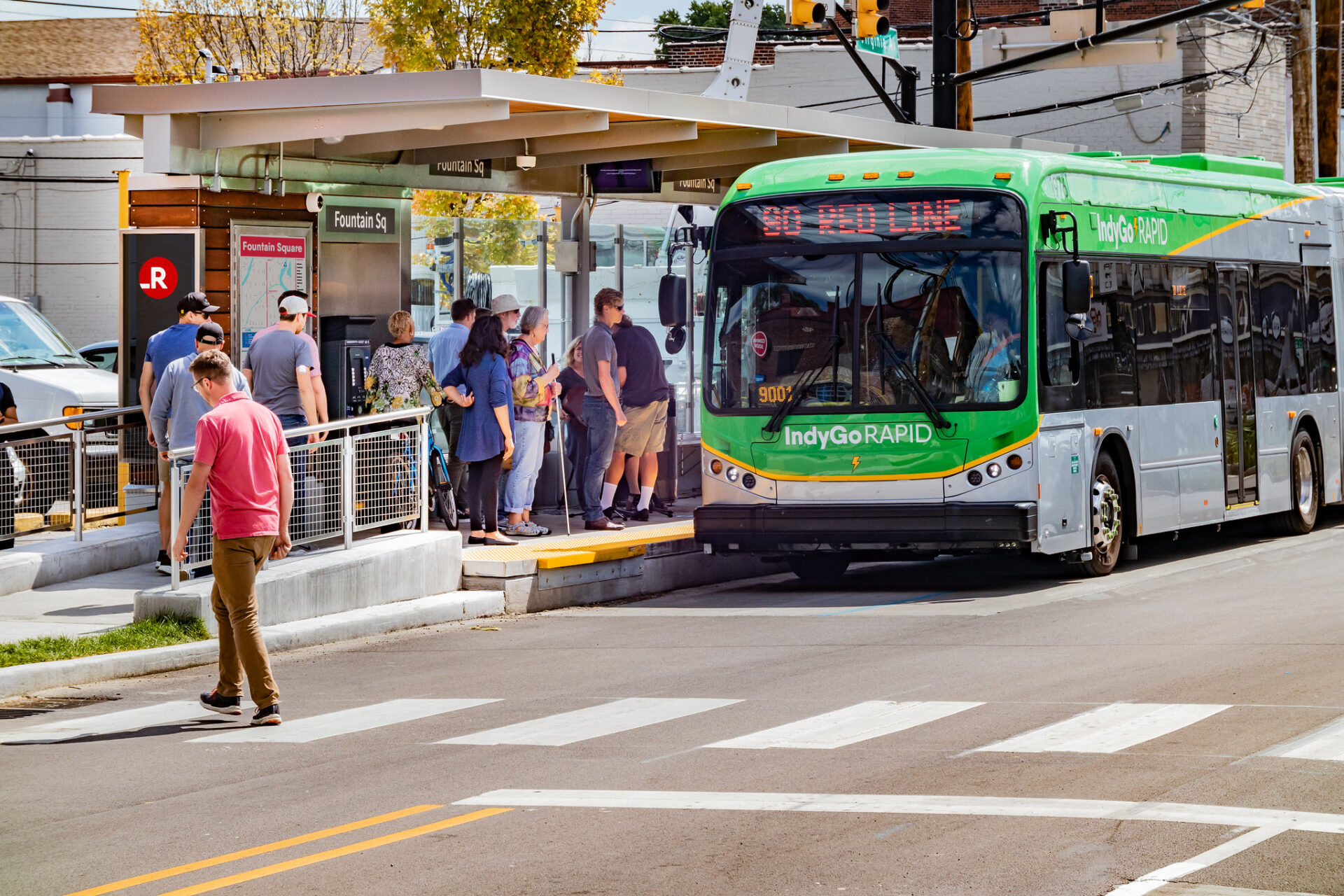
In Indianapolis, transit agency IndyGo is collaborating with the Indianapolis Department of Public Works on a long-awaited project that will convert two one-way arterials to two-way roads, maximize walkability to transit, and speed up bus service. Christian Cambron and Ryan Gallagher noted:
- IndyGo is contributing approximately 50% of the costs, giving them more influence over the final designs.
- The agency carefully considered the right type of bus stop design (floating, shared, or bus bumpout) to best serve each portion of the corridor.
August 2025
Street Design and Bus Rapid Transit
August’s sessions dove into the why, how, and what of street design tools that can increase transit reliability and efficiency in cities.
Why transit priority?
Speaker: Dan Freeman, TransLink Senior Consultant
TransLink’s Dan Freeman introduced the benefits of transit priority, highlighting the successes of agencies that have established dedicated transit priority and BRT programs across the U.S. and Canada.
- Transit priority is cost-effective relative to rapid transit projects, allows for rapid implementation,
- While transit priority remains a niche practice in agencies and road authorities, networks like NACTO are an opportunity to strengthen the community of practice and support the growth of transit priority programs.
BRT toolkit in the Twin Cities
Speaker: Ian Kowalski, RapidRide Line Lead, King County Metro Transit
In the Twin Cities (Minneapolis-St. Paul), Metro Transit has developed a toolkit to build out its network of bus rapid transit lines on arterials by 2030.
Strategies for successful rapid transit in the toolkit include:
- pre-boarding fare payment & all-door boarding
- bus priority signals & lanes
- optimized station spacing with high-tech stations
- faster, frequent all-day service
The newest BRT line in Minneapolis, the B Line on Lake Street, opened in June 2025. The corridor had the highest concentration of crashes in the city, and improving safety while reducing racial disparities in fatal and serious injury crashes was a key priority for both Metro Transit and the county. The two entities partnered to find solutions that would improve safety and bus service without fully reconstructing the corridor. The final option converted four vehicle lanes to three within the existing curb-to-curb distance, supported with bumpouts to reduce pedestrian crossing distances.
Expanding BRT in Washington state
Speaker: Ian Kowalski, RapidRide Line Lead, King County Metro Transit
The eight RapidRide routes that make up King Country Metro’s bus rapid transit system serve 20% of weekday bus riders—and the agency is expanding the service even more with ambitious projects that require significant financial and political coordination with local municipalities.
Recently, the City of Seattle used an FTA Small Starts grant to fund and deliver a bus rapid transit line (the G line) with implementation support from King County Metro. The project included a complete streets rebuild along a three-mile corridor and included dedicated bus lanes, protected bike lanes, and nearly four miles of new sidewalk.
The forthcoming I & J Line routes, also funded by Small Starts grants, have required similar coordination efforts between King County Metro and local municipalities.
September 2025
Network Planning
In September, new NACTO members Montgomery County, Maryland, and the Toronto Transit Commission shared their perspectives on two facets of bus network planning.
Routine annual service changes in Toronto
Speaker: Jasmine Eftekhari, Toronto Transit Commission
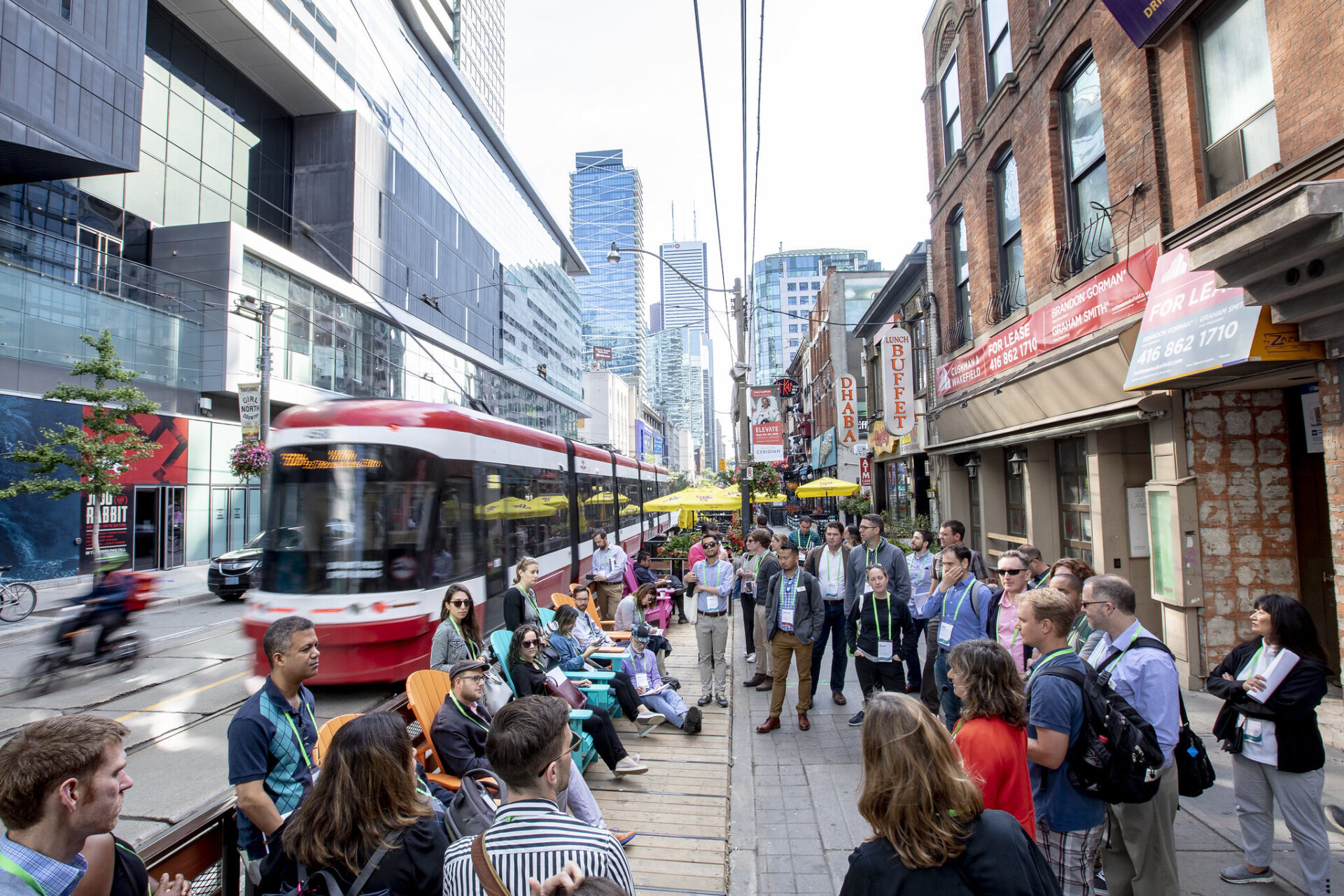
The Toronto Transit Commission (TTC) explained the process they used to develop their upcoming Annual Network Plan, which recommends service modifications and improvements for the coming year. In addition to agency goals to maintain service standards, these annual plans prioritize rider feedback and the needs of women, shift workers, and low-income riders.
The 2026 Annual Network Plan focuses on route changes to address shifting travel patterns around a university and hospital, sets construction planning guidelines to maintain accessibility, and evaluates the performance of the agency’s Express Bus Network. TTC engaged nearly 5,000 participants over seven weeks of public outreach in 2025, with a majority of participants supporting the agency’s proposed route changes and improvements to the express network.
Bus network redesign in Montgomery County, Maryland
Speaker: Deanna Archey, Montgomery County
The Montgomery County, Maryland, DOT embarked on an ambitious bus network redesign, Ride On Reimagined, at the same time as its regional partner WMATA’s bus network redesign from 2023 to 2025.
With a variety of bus services and multiple regional partners, MCDOT’s goals for the redesign were to improve efficiency between its local and express networks and strengthen coordination with regional partners. The redesign process included the development of 1-Year, 5-Year, and Visionary plans to roll out route and service changes, which were carefully coordinated to launch with WMATA’s redesign to minimize gaps in service. MCDOT held multiple public forums, pop-up events, and focus groups (many jointly with WMATA) with hands-on activities and on-site surveys to prioritize transparency and keep the public informed throughout the entire process.

October 2025
Funding and Policy
For the final Transit Tuesdays session, NACTO facilitated an interactive discussion with NACTO member cities on a variety of pressing policy topics, including opportunities to diversify funding sources, strategies for using data & storytelling to support public transit, and transit policies on the horizon for 2026 and beyond.
Because this session was discussion-based, rather than presentation-based, it was not recorded.
LEARN MORE
Transit
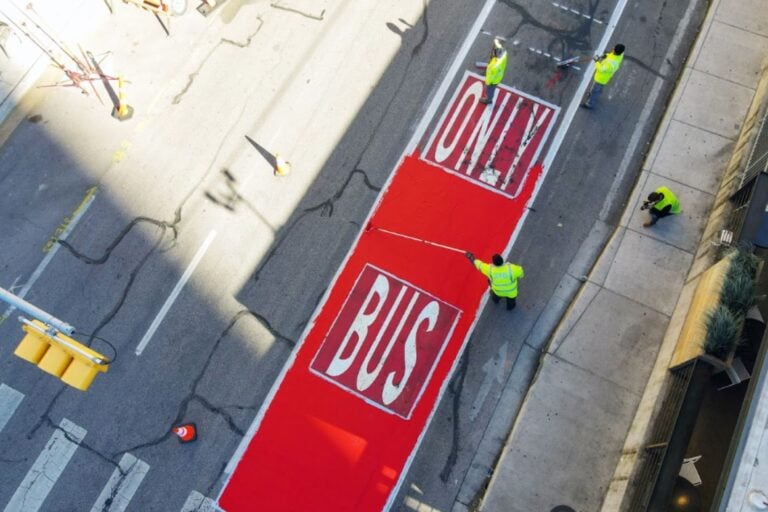
NACTO advances transit-forward street design and management practices to enable frequent, reliable public transit.
Transit on City Streets
Delivering better transit requires cities and transit agencies to work hand-in-hand. NACTO supports these partnerships.